


Part I
THE LAWSUIT OF MS. TRAN TO NGA AND THE SOLIDARITY OF THE FRENCH PEOPLE IN THE FIGHT FOR JUSTICE FOR VIETNAMESE AGENT ORANGE VICTIMS
Not a lonely journey
The struggle for justice for Agent Orange victims is not only taking place within the national scope, but has become an international issue. In that journey, the lawsuit of Ms. Tran To Nga – a former journalist, who used to operate in war and expose to Agent Orange/dioxin – is not just the story of an individual, but has become a symbol of conscience and responsibility in international solidarity in the struggle for Vietnamese Agent Orange victims. She decided to sue the American chemical companies that manufactured and supplied this dangerous chemical to the US Military for use in the war in Vietnam. This decision required not only personal courage, but also a solid legal foundation, extensive professional support, and sustained resources to pursue. This event opened a challenging yet meaningful legal journey, because she has to confront powerful multinational chemical corporations that do not easily accept their responsibility for the decades long war consequences.
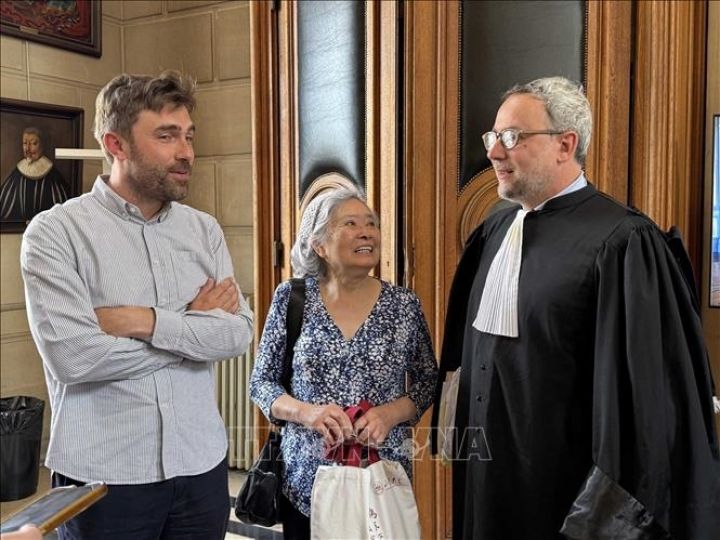
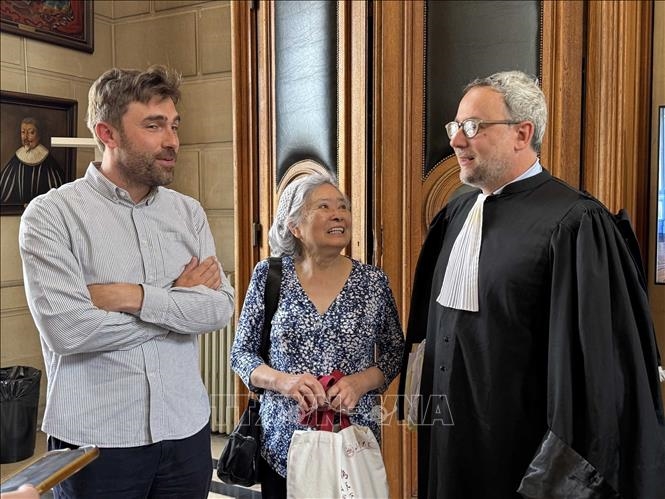
Accompanying Nga is a French bar association, headed by lawyers William Bourdon and Bertrand Repolt, with the support of the committee advocating for the case. With a sense of responsibility and professional integrity, they participated in the lawsuit entirely voluntarily, providing free legal services – such a difficult choice given the protracted, complex nature of the case and the significant pressure from all parties involved.

Ms. Tran To Nga and her legal partners at the International Court of Justice
Lawyer William Bourdon – renowned for his international lawsuits on human rights and the responsibility of multinational corporations – has repeatedly emphasized that Ms. Tran To Nga's case is not simply about seeking material compensation, but more profoundly, an effort to “reclaim truth and justice for history”. Along with him, lawyer Bertrand Repolt and associates have spent years researching the case, gathering evidence, and building a strong legal argument to clarify the responsibility of these chemical companies.
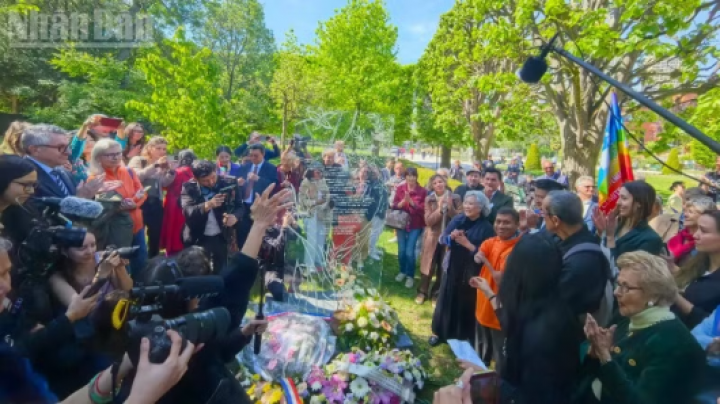
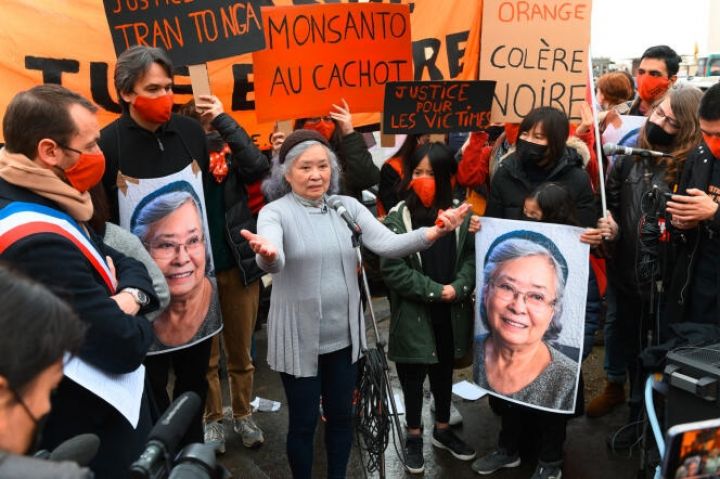
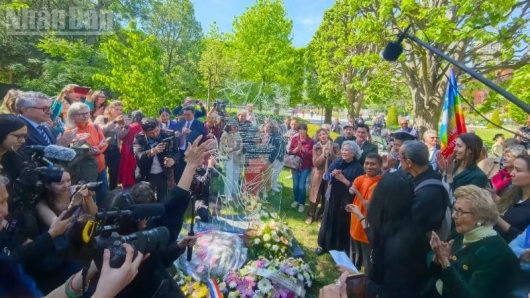
Not only legal support, Nga also received widespread support from progressive people in France, Belgium, Germany, and other countries. Throughout the trial, numerous protests and marches were held in Paris and several major cities, attracting large numbers of people, social organizations, and peace and human right activists. Banners calling for justice for Vietnamese victims of Agent Orange were held high, demonstrating strong support for the lawsuit.

A poster supporting Ms. Tran To Nga in Paris
The public outcry in France not only contributed to public pressure but also spread a message about historical responsibility and human conscience. The image of French citizens standing alongside a Vietnamese victim in her challenging legal journey has become a vivid symbol of international solidarity. This once again affirms that Nga's struggle for justice is not solitary, but represents the common voice of people who cherish justice worldwide.
An unprecedented legal struggle
Nga's lawsuit is considered one of the most complex international civil lawsuits related to the consequences of war. The companies being sued are all large American corporations with substantial financial resources and strong legal teams. Meanwhile, the current international legal system still has many gaps in addressing the responsibility of non-state actors for the consequences of war.
Nevertheless, through meticulous preparation and perseverance, her lawyers overcame numerous procedural hurdles to have the case accepted by a French court. The hearings attracted international attention, not only because of its legal nature, but also because of the its profound humanitarian significance.
The Évry City Court (France) ruled against the plaintiff, citing the immunity of companies in the context of war. This outcome did not accurately reflect the nature and consequences of the case. However, it is noteworthy that after this ruling, the lawyers did not give up; they continued to pursue the case to a higher level of jurisdiction, while maintaining public advocacy and raising international awareness about the consequences of chemical weapons in war.
Solidarity and responsibility of the international community
The support of world lawyers, organizations, and progressive people for Nga is a manifestation of the conscience and responsibility of the international community. In a context where many international issues are still influenced by political and economic interests, the fact that independent individuals and organizations dare to stand up to defend justice for Vietnamese victims of Agent Orange has profound international significance.
The Lawsuit supportive committee played a crucial role in connecting social resources, launching media campaigns, and mobilizing public support in France and internationally. As a result, the lawsuit did not sink into dry legal procedures, but became a widely discussed issue, contributing to the awakening of empathy and a sense of responsibility of the international community.
From a broader perspective, the lawsuit raised unresolved issues regarding international justice: Who is responsible for the consequences of war? Can economic corporations stand outside ethical norms? And how can the voices of Vietnamese Agent Orange victims be heard in a world still rife with inequality?
Although the legal outcome has not been as expected, Nga and her companions’ journey has made undeniable value. First, it has brought the use of chemical weapons in war back to the international forum, reminding the world of one of the worst humanitarian disasters in the 20th century, the consequences of which still linger in Vietnam today.
More importantly, the lawsuit has reinforced the belief that justice is not the prerogative of the strong. Even when faced with giant corporations and complex legal obstacles, an individual can still speak out, and that voice can spread if supported by international solidarity.
For Vietnam, the support of lawyers and people of France, and other countries is vivid proof of the effectiveness of the people-to-people diplomacy – where feelings, sharing, and responsibility are placed above all differences. This is also a great source of encouragement for Agent Orange victims, who are still battling illnesses resulting from the war.
Nga's journey to seek justice is not yet over. Difficulties and challenges remain, but the companionship of French lawyers and progressive people worldwide will give her strength and faith to continue fighting for justice for Agent Orange victims. As long as conscience speaks, there is still hope for justice. And it is in these persistent efforts that a humane message is affirmed: the suffering caused by Agent Orange is not only of Vietnam, but a shared responsibility of humanity, and the struggle for justice for Vietnamese Agent Orange victims is not a solitary one but accompanied and supported by progressive people around the world.
(Continued: Part II - The Journey to heal the pain of Agent Orange – A symbol of reconciliation and international solidarity between Vietnam and the United States)

_thumb_720.jpg)

_thumb_720.jpg)



.jpg)


Comment